
What I learnt at a Wake
Two funerals and an epiphany

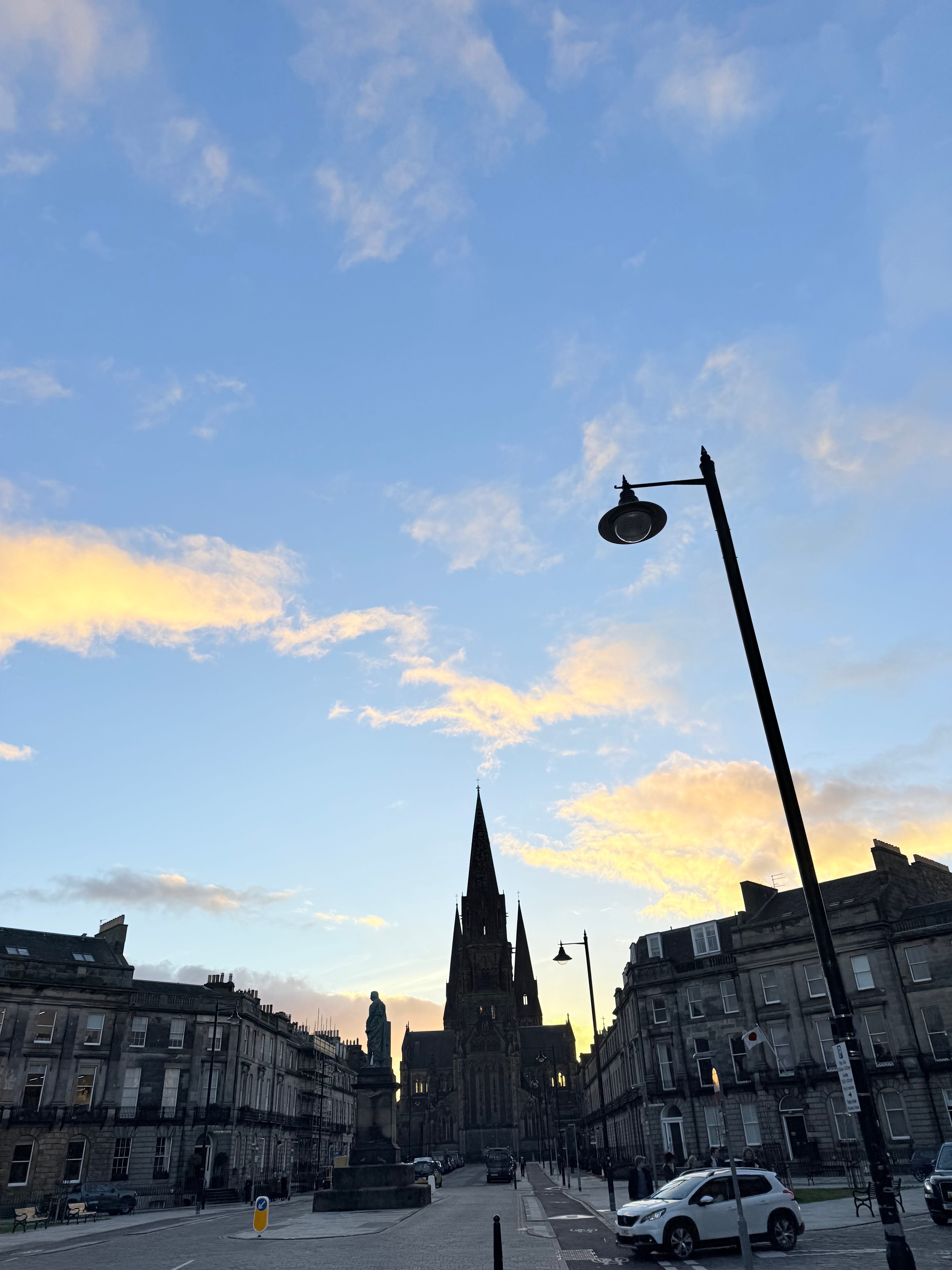
Looking around the massive granite splendour of Edinburgh’s St Mary’s Cathedral I was struck by how full it was; not just with the snow capped heads of my generation but with a large contingent of mourners in their twenties and thirties. We were there for the funeral of a man I had been at university with. He had died undergoing heart surgery at the age of sixty five. Paddy was not the salt of the earth type - he was the sort of man who would go out for a pint of milk and come back two hours or even two weeks later with a puppy, a racehorse or a gold nugget but without the milk. Not salt, but definitely umami, he added flavour to every gathering; a lopsided smile, a filthy laugh and an infinite capacity for festivity. Captain of cricket at Eton, a keen bridge player and an encyclopaedia of shaggy dog stories, Paddy was a lost literary archetype - the lovable cad like Wodehouse’s Psmith, or Waugh’s Basil Seal, or even Just William. Paddy always had a money making scheme ranging from selling renovated revolvers to flogging Thermomixes, but after some abortive attempts in his twenties he never, as they say, held down a job. He was ineffably cheerful, though, making his way through his many vicissitudes with a grin, a cricket ball and a small dog. In his fifties he had a heart problem which led to him waking up in hospital to find that his lower leg had been amputated. He took this with a stoicism which seemed effortless, but must have been hard won. He named his prosthesis, Lionel, after his distinguished grandfather who had lost his leg in the First world War.
The church was full of Paddy’s ex girlfriends. Although he married very happily in his early thirties, the years before had been a tessellated pavement romantically. I think I was one of the very few women he knew at university who had not succumbed to Paddy’s charms. Somehow he managed to remain on good terms with all of his exes, who were all to a woman full of admiration for his wife. Paddy had two children who spoke with wit and huge affection about their father at the service. One of the things that struck me was how they took his presence for granted - he was always there to help them with their homework or when they came back from a party at 3 am - happy to chat until dawn.
Two of his friends gave eulogies at the service, and then a whole lot more stood up to speak at the wake. Not just his contemporaries, but the friends of his children who talked about his ability to make them feel instantly on equal terms, his ruthless editing of their personal statements, and his readiness to supply cocktails and cigarettes. It was an impressive send off for a man whose CV was sketchy to say the least. The wake went on till the small hours and left the mourners with an appropriately Paddy sized hangover.
I couldn’t help contrasting Paddy’s funeral with that of a well known writer who had died a few years earlier. That church had also been full , it helps to die young if you want a good turnout, but the eulogy had been given by the author’s agent who spoke not of the man, but of his royalties, and the remarkable rights deals that he the agent had secured for his client in various Balkan countries. There were no speeches at the funeral tea, or touching slideshows, or even a playlist of his favourite music. Instead we were invited to take away copies of his many publications. This man had a lovely wife and three splendid children, but while everyone at the church regretted his untimely death from cancer, the vibe did not coalesce into an individual shaped whole in the way it had for Paddy. This was partly because the mourners at Paddy’s funeral were a cohort - from school and university who were marking the beginning of their collective demise. But the difference lay too in the way the two men had lived their lives.
Both men had been selfish - but in very different ways. Paddy was a man who would have a three hour bath in a shared flat with only one bathroom. The famous author was a man who could not bear the competition for his wife’s attention from his infant son. Paddy was supported by his wife financially for most of their married life, the famous author left his family ‘ financially secure’. One man had mourners dating back to his childhood at his funeral, the other had a collection of his wife’s friends and a collection of acquaintances who probably thought twice about the cost of the taxi to the London suburb where the funeral was being held. One man had obvious but convivial vices - alcohol, cigarettes and until his marriage women ; the other was impressively hardworking, a multi talented writer who was also compulsively unfaithful to his devoted wife. Paddy’s vices were always on view, the successful writer’s were submerged - a fictional shadow life - lying beneath the gold foiled surface.
I am very glad I won’t be there for my own funeral. I would hate to know how I how I had fared in that particular popularity contest. But Paddy’s funeral has made me more attentive to what a life well lived really means. To make the sort of impression on people that means they will travel to the other end of the country to pay their respects is not about achievement, or even outstanding virtue. It is about a generosity of spirit that is vanishingly rare in today’s world. Paddy may have been a flaneur but he was also someone who met people on their own terms, who didn’t judge and who was always up for a good time. These qualities don’t get you into the obit columns but they leave a huge impression on the people who are left behind. I left Paddy’s wake resolving that I would try and be more present in the lives of the people I love. I can’t play bridge and I like to go to bed early after just one negroni but I will try to listen more, to suppress my urge to judge and to make everyone feel welcome. My worldly achievements may bring me satisfaction, but it’s what I do for others that will swell the congregation at my funeral.
My husband died 6 years ago, tragically early, at 63. Three hundred people attended his wake, which turned out to be like a wedding but without the groom. A man much missed, he lit up every room into which he walked. With a huge smile, booming laugh, and wicked sense of humour, he was irresistible company. His was a life of true richness, value and meaning. Like your friend Paddy. A rare thing x
Loved this Daisy. I met Paddy and spent a few days with him en famille on Lake Como and my children were entranced by him and called him and S “the Paddies.” Trying to figure out the other one…